
Façade water ingress investigation in London
The stain inside is not always below the point where water entered.
Water can travel through joints, cavities and interfaces before it becomes visible internally.
Before another external joint is resealed, the useful question is not simply “where is the stain?” but “what evidence connects the symptom to a possible entry route?”
Start with the pattern
Tell us:
- where the water appears internally;
- when it happens;
- whether wind direction or prolonged rain changes it;
- what has already been repaired or tested;
- whether previous work changed the problem.
Internal photographs, dates, floor plans and marked-up elevations are often useful.
A visible internal leak does not, by itself, identify the external defect.
Inspect the likely interfaces
Depending on the façade, the investigation may need to consider:
- glazing perimeters;
- external sealant joints;
- cladding interfaces;
- cappings and flashings;
- component junctions;
- other accessible façade details around the affected area.
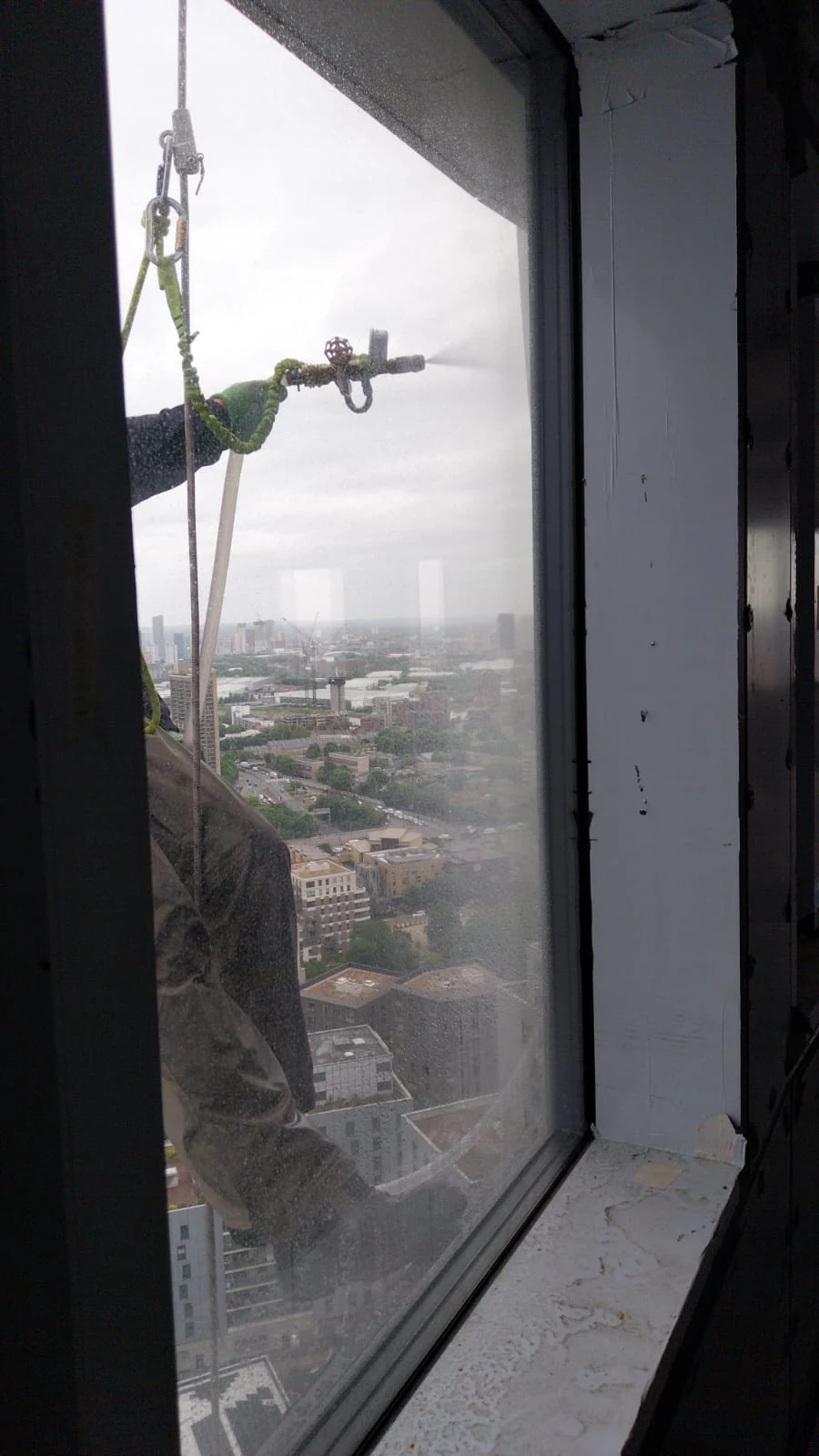
Close access can record open joints, staining, detached material, damage and other visible conditions.
Those observations are evidence to assess. They are not automatically proof of the leak route.
Testing needs a question
Water testing is most useful when the locations, sequence and observation method are agreed in advance.
The test should be designed to help answer a specific question.
Internal observation, protection against unintended ingress and the limits of the test also need to be clear.
Opening components, dismantling the façade or carrying out specialist diagnostic testing is separate work and requires the appropriate scope and competence.
What the investigation can establish
A useful record should separate:
Observed
What was directly seen or recorded.
Indicated
What the available evidence suggests.
Not established
What cannot be concluded from the inspection or test.
An intermittent leak may not occur during the visit.
A dry inspection cannot rule out every possible route.
Concealed construction remains concealed unless an authorised intrusive investigation is part of the scope.
What happens after the cause is better understood?
The evidence may lead to:
- a defined sealant replacement;
- a local façade repair;
- glazing work;
- further testing;
- opening-up;
- manufacturer input;
- specialist design or engineering advice.
The repair should follow the evidence rather than the other way around.
Send the leak history
Send the postcode, internal and external photographs, affected floor or elevation and any previous reports, repairs or drawings.
You do not need to identify the cause yourself.