
Sealant replacement & mastic works in London
A failed joint may be obvious.
Why it failed is not always obvious.
External sealants can split, detach, shrink, weather or lose adhesion.
Replacing them properly involves more than applying a new bead over what is already there.
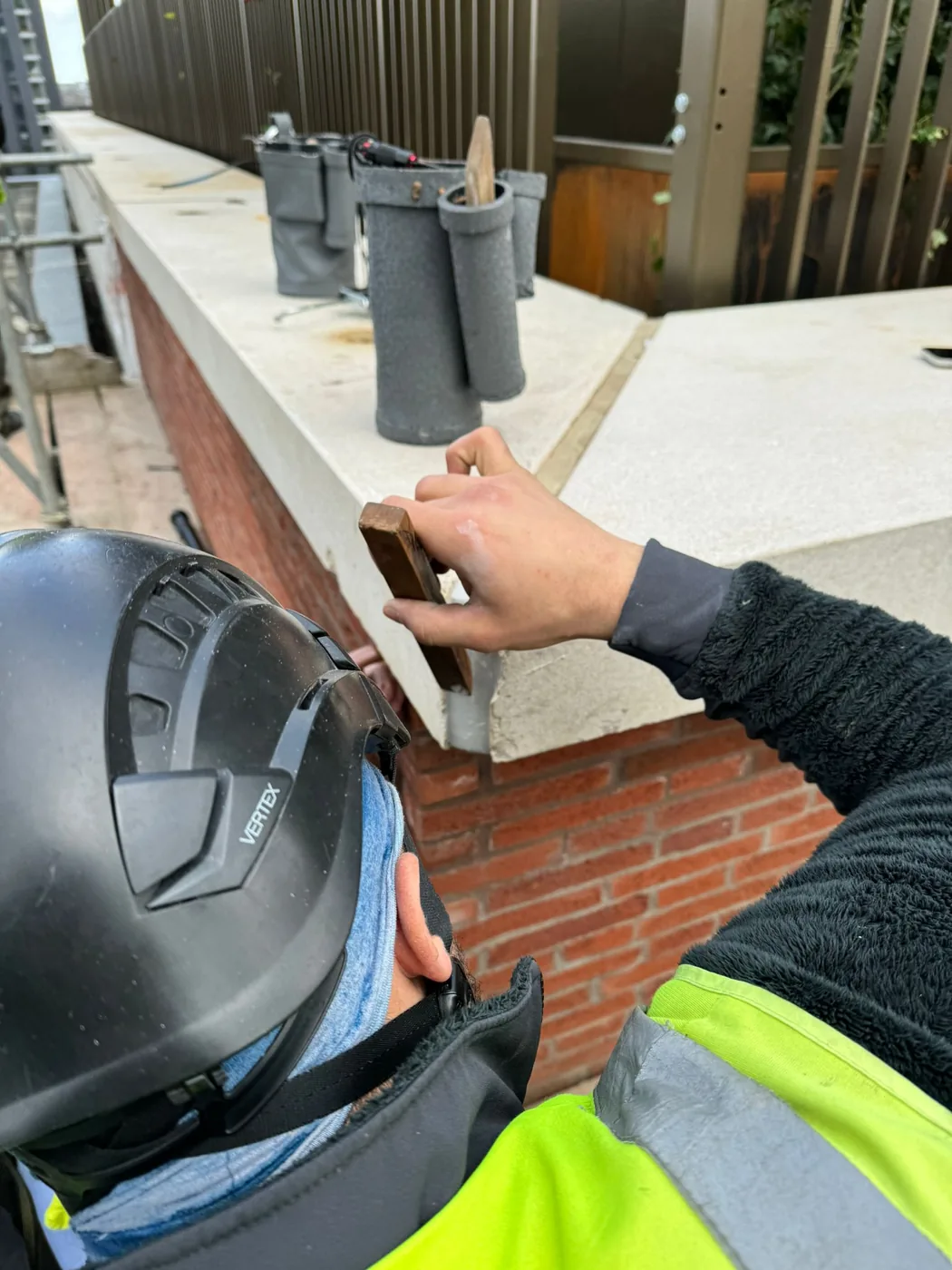
Before replacing the sealant
The joint needs to be understood.
Relevant details may include:
- the substrates on each side;
- joint width and depth;
- existing backing material;
- movement requirements;
- previous repairs;
- surface condition;
- the intended sealant system.
Photographs can identify the location, but they do not always show what is behind the visible surface.
Preparation matters
A replacement package should state how failed material is removed and how the adjoining surfaces will be prepared.
Residue, loose material and unsuitable previous repairs can affect adhesion.
Unexpected substrate deterioration should be identified rather than covered over.
Primer, backing material and sealant should follow the requirements of the agreed product and joint detail.
A fresh bead over failed material is not automatically a repair.
A leak does not automatically mean “reseal it”
If water ingress is the reason for the enquiry, the visible joint may be one possible route rather than the confirmed cause.
Where the entry path is uncertain, investigate first.
A neat new seal should not be sold as a guaranteed cure for an unconfirmed leak.
Specialist joints need specialist responsibility
Structural glazing sealants, fire-resisting joints and other designed specialist systems are not ordinary weather-seal replacements.
They require the relevant specification, approvals and competence.
If the purpose of the existing joint is unclear, that question needs resolving before the work is accepted.
Working at height
Rope access may suit localised external joints where the building and task allow it.
The method still needs to support:
- proper removal and preparation;
- controlled application;
- tool and material management;
- protection below;
- product temperature and weather requirements.
On an occupied building, working hours, windows, roof access and communication with occupants may also affect the sequence.
Local repair or planned replacement programme?
Mark the affected joints on photographs or drawings.
For a wider programme, define the elevations and approximate joint lengths so that everyone understands what is included.
Adjacent joints outside the agreed scope should not be implied to have been renewed.
Send the joint details
Send overview and close photographs, approximate quantities, height, substrate information and any available specification.
If the quantity or joint condition is uncertain, say so.
An assessment may be more useful than guessing a fixed price from photographs.