
Rope access services in London
Rope access is an access method. It is not the job.
Start with the task, then decide whether ropes are suitable.
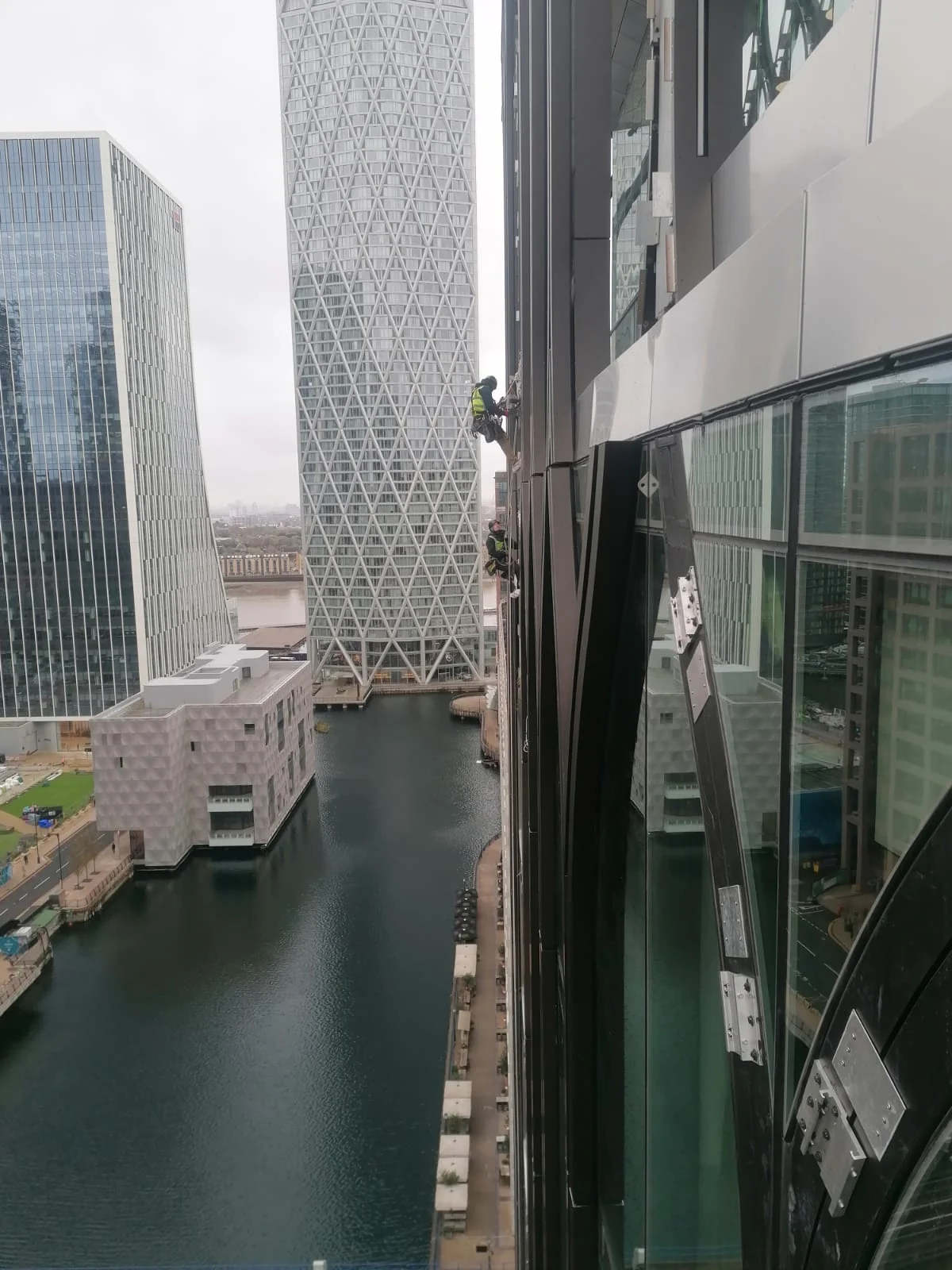
Where rope access can make sense
Rope access may suit localised defects, dispersed inspection points, high-level joints, selected repair locations, glazing or façade cleaning, and situations where large equipment would cause disproportionate disruption. The footprint remains small, but the task still needs full planning.
When another method may be better
MEWP, cradle, scaffold or another method may be better for heavy materials, a large workface, repeated high-volume work, unsuitable roof or anchor conditions, rescue geometry or project constraints. The access method supports the trade task.
Close access for inspections and investigations
Close access can photograph and record details and support condition or water ingress work within defined boundaries. It does not provide engineering authority.
Repairs and maintenance from ropes
Localised repair, sealant and cleaning may suit ropes, but trade requirements, materials and competence still matter.
Access planning is part of the work
Plan access and egress, anchor information, rope protection, work positioning, supervision, rescue, tools and materials, exclusion below, occupied interfaces, weather and changing conditions. Previous rope access is not proof of suitability.
Competence must match the task
IRATA rope access competence covers the access discipline only. It does not cover glazing, sealant, cladding or structural trade competence. Relevant specialist competence must be identified and checked; the proposal defines responsibilities and does not imply a standing team or IRATA company membership.
Start with the task
Send the location, photos and what needs doing. You do not need to decide rope access in advance.